I’m beginning the season with another post about butterflies, but I promise I’ll be back to posting about bees and honey again soon!!
Come celebrate with me this Tuesday!
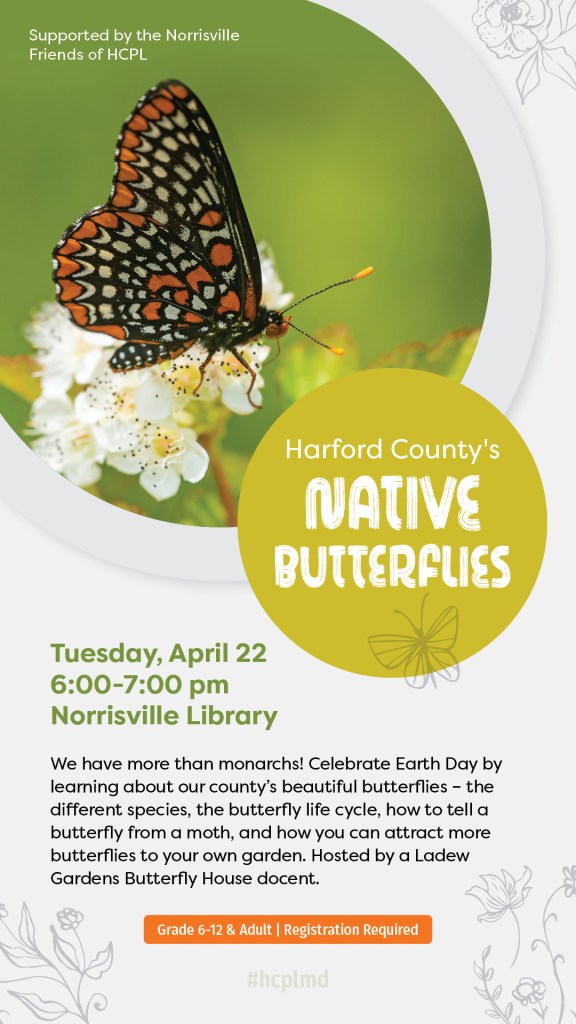
Along with two other Ladew Gardens Butterfly House docents, I’m hosting a NATIVE BUTTERFLIES OF HARFORD COUNTY program at the Norrisville Library at 6:00 p.m. We’ll have lots of great info for all the pollinator fans out there. Come see some gorgeous photos of some of Maryland’s most beautiful butterflies. You can learn about their life cycle, how butterflies differ from moths, and how you can attract more of them to your own backyard, balcony, or farm. Register here.
As we head into fall, I’m taking note of all the amazing butterflies I’ve seen this season, both near and far. Most of the butterflies I saw this year were native to Maryland, but a few were spotted in more exotic locales. I captured photos of beautiful North and Central American butterflies in a Mexican ecopark, on a Costa Rican coffee estate, and, of course, in Harford County.
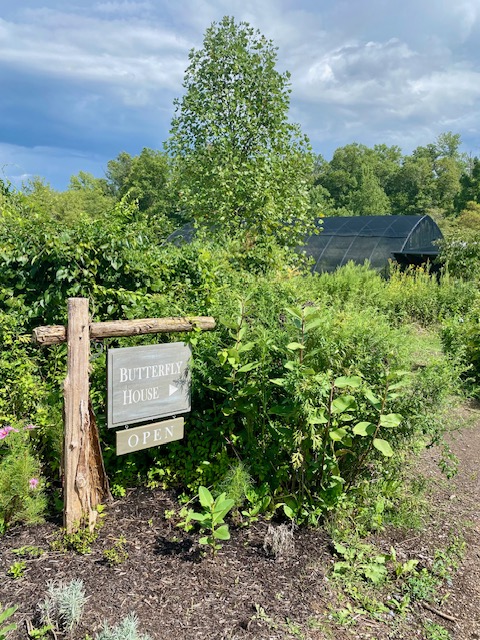
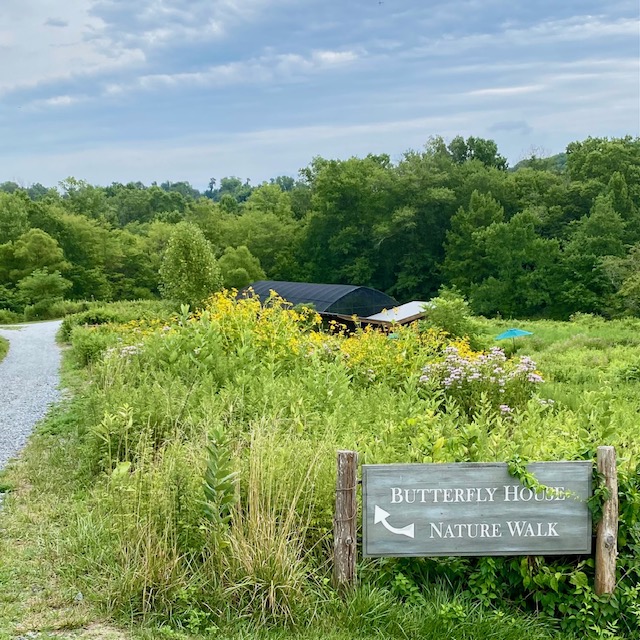
Native Butterflies at Ladew
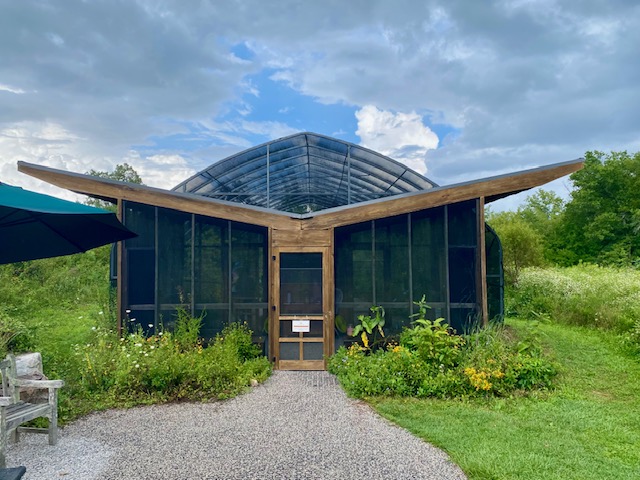
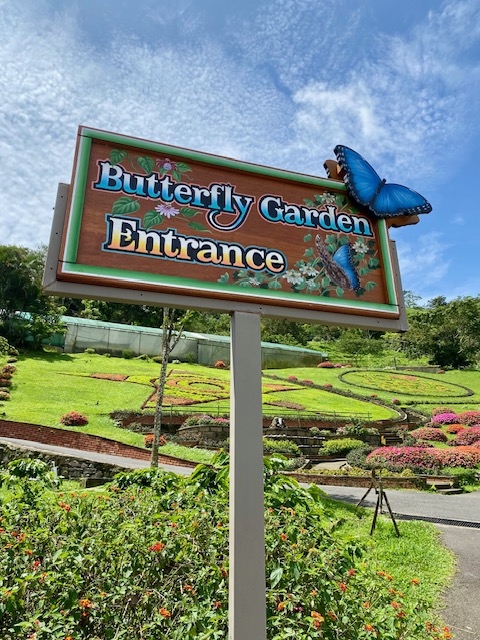
Ladew Gardens Butterfly House is open for another week or so. There’s still time for a visit. Although the butterflies are shifting into fall mode, there’s still a lot to see there and you can pick up tips for planting or improving your pollinator garden next spring!
The Butterfly House was designed to look like a butterfly
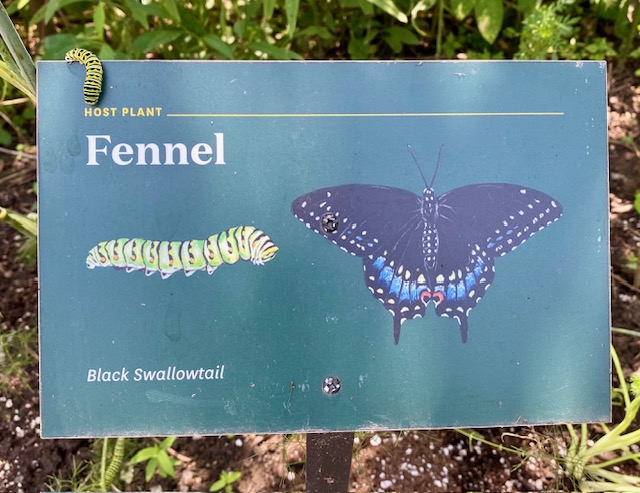
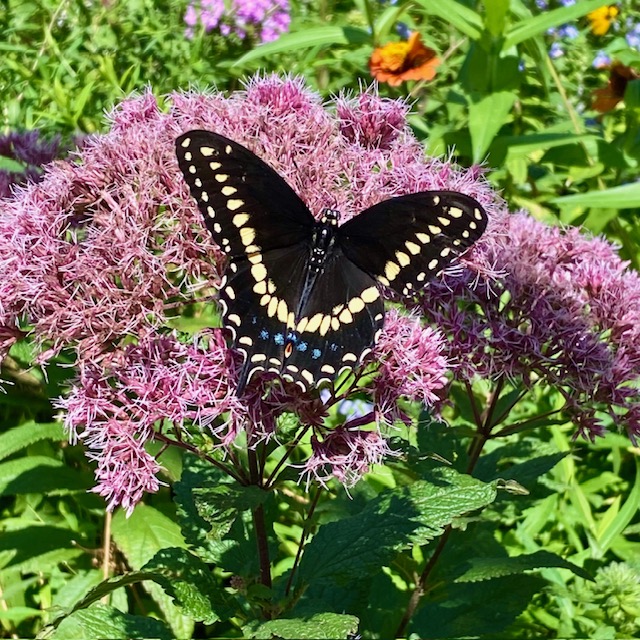
Black Swallowtails
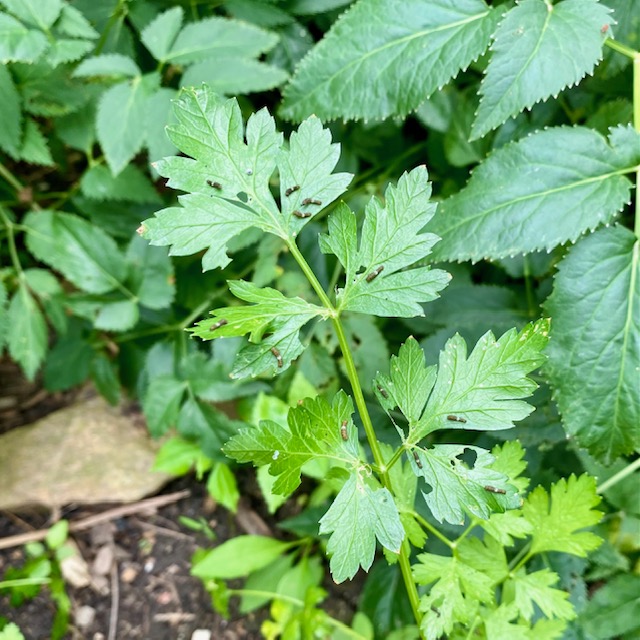
Fennel is one of the host plants for Maryland’s Black Swallowtail butterflies (anything in the carrot family will do). Love that the caterpillar below was checking out his own sign! 🙂 The butterfly on the right is a male — you can tell because it has more yellow and less blue.
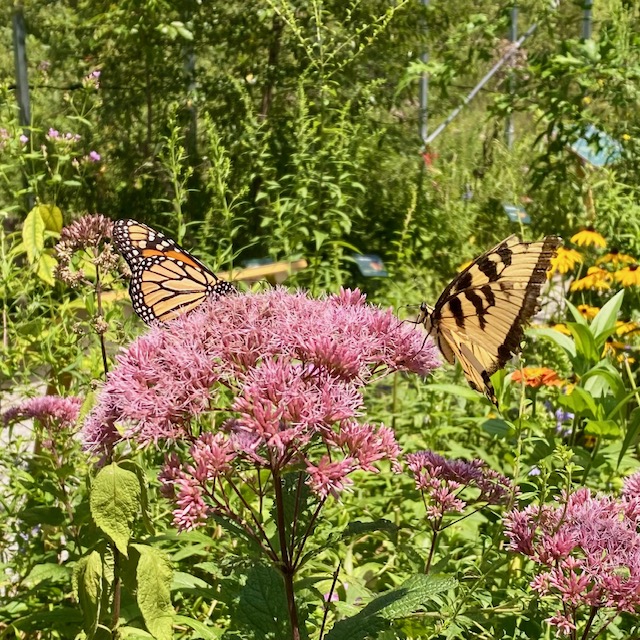
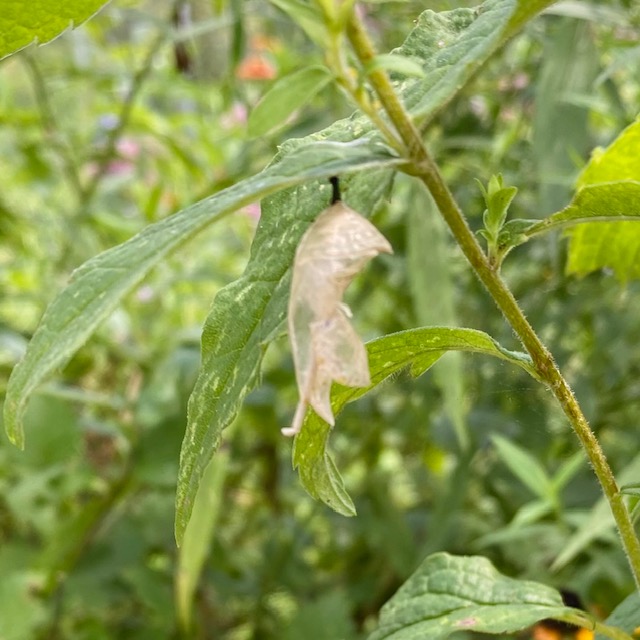
Like last year, the Butterfly House had a lot of monarchs in all stages. Keep planting that milkweed! 🙂
Monarch and Eastern Tiger Swallowtail on Joe Pye WeedMonarch chrysalis before butterfly has emergedMonarch chrysalis after butterfly has emerged
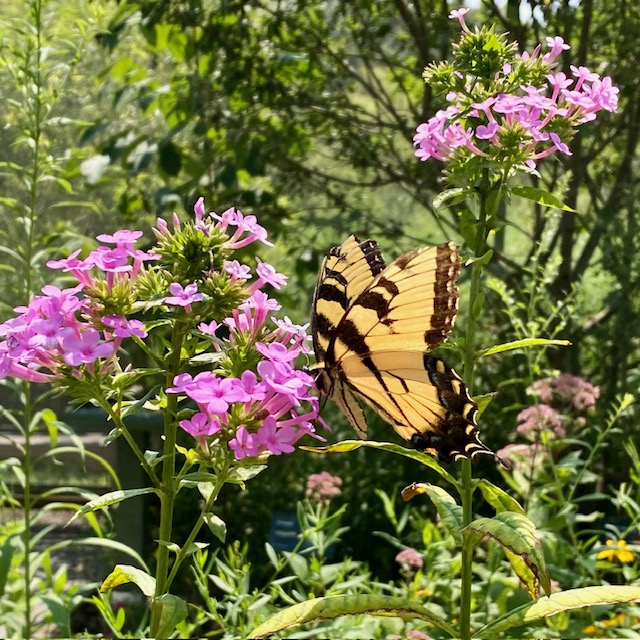
Eastern Tiger Swallowtail
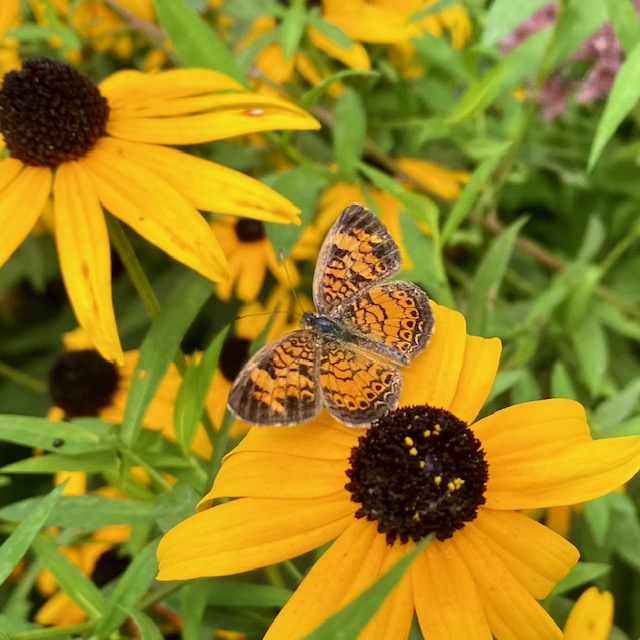
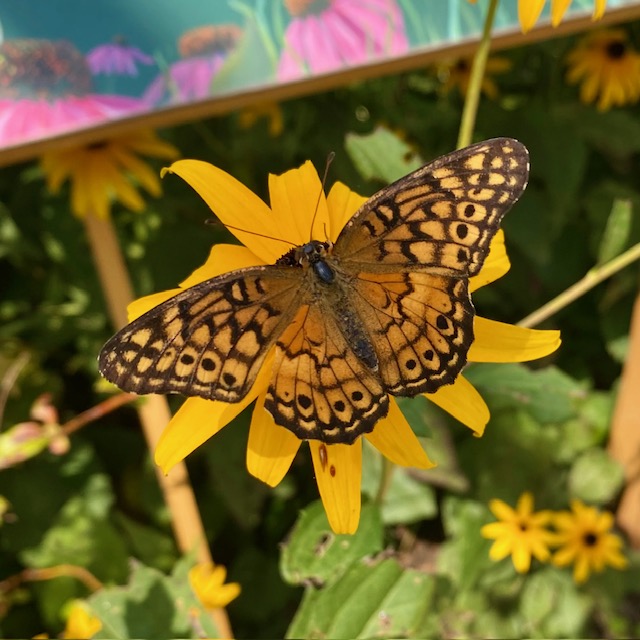
Pearl Crescents and Variegated Fritillaries
I get these two confused a lot. It’s easy to see why. I’m hoping my careful notes here in this post will help me get up to speed quickly next year.
Pearl CrescentVariegated Fritillary
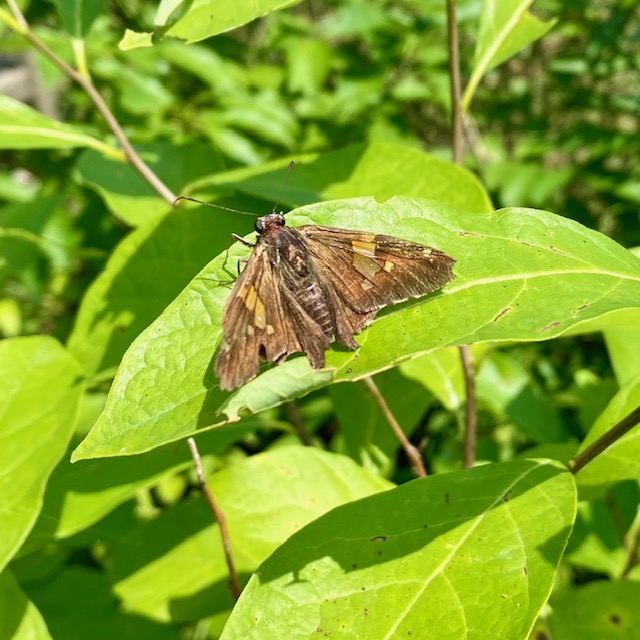
Silver-spotted Skipper
For some reason, I always forget this one’s name… This is a butterfly, not a moth, even though it has a thicker body and is less colorful than many butterflies.
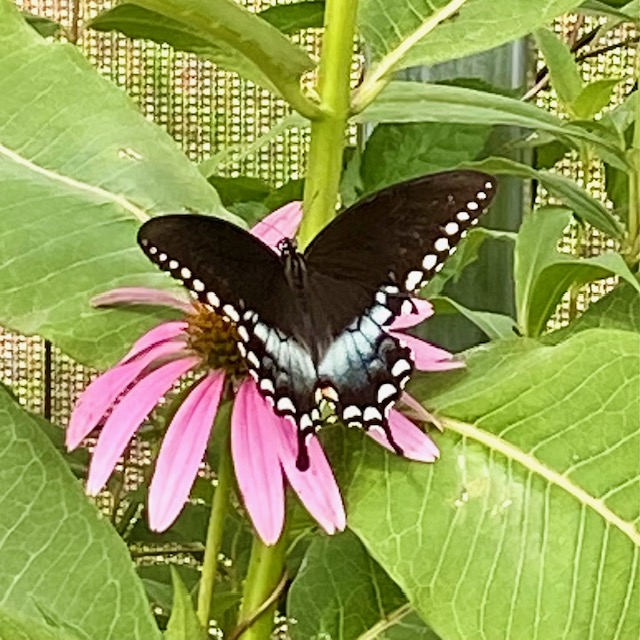
Spicebush Swallowtails
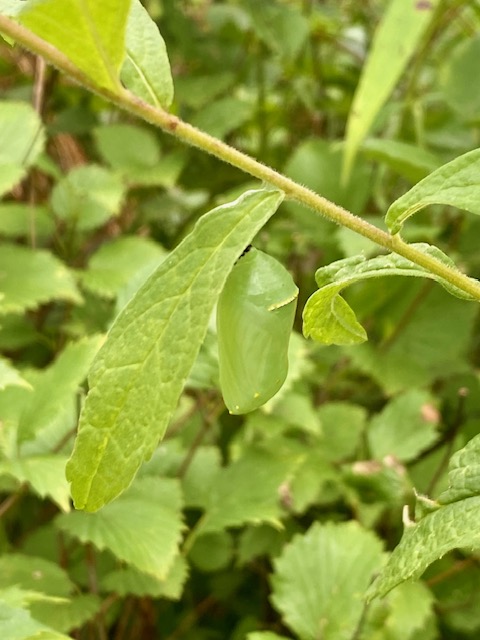
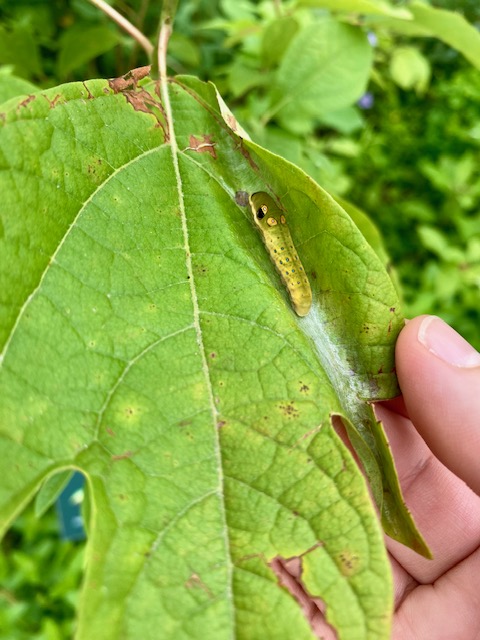
I love these butterflies for many reasons: their host plant is incredibly easy to remember (spicebush — haha), their caterpillar stage is adorably cute (they have big faux eyes and like to “taco” or curl up inside spicebush leaves for protection), and they are beautiful in the butterfly stage!
There’s a spicebush caterpillar curled up inside that leaf…Here he is in all his adorable cuteness!Spicebush Swallowtail Butterfly
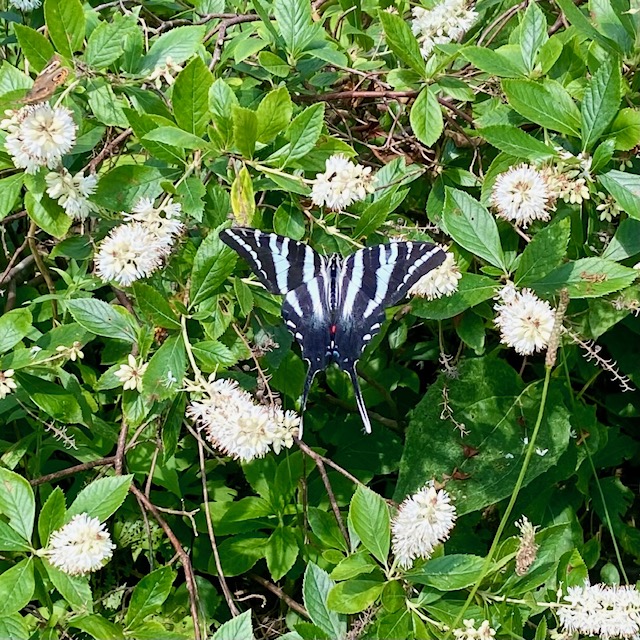
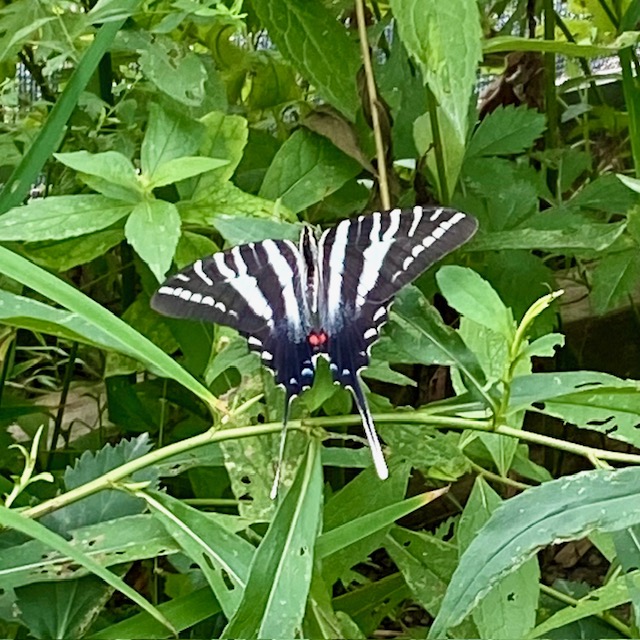
Zebra Swallowtails
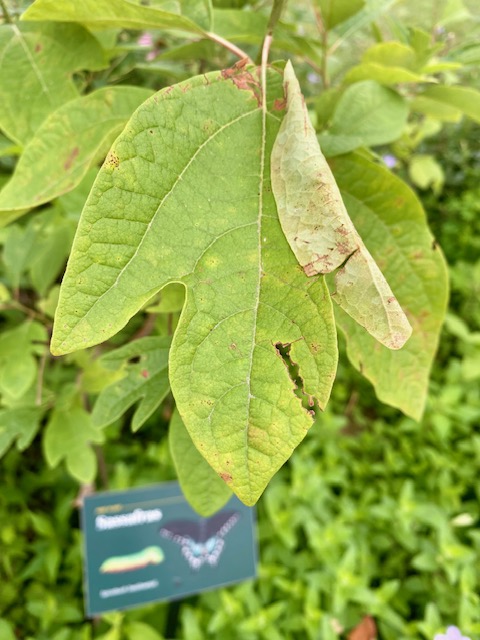
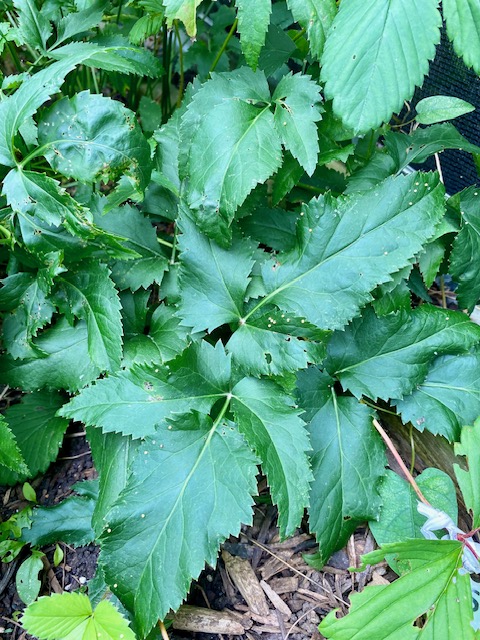
These are really neat and dramatic looking. Their host plant is the Pawpaw tree, which is native to Maryland. Have you ever eaten pawpaws? They are an interesting fruit, kind of like a banana in consistency but hard to describe in taste. You can find them at farmer’s markets and specialty stores when they’re in season. I’ve heard pawpaw ice cream is the best, but haven’t had a chance to try it yet.
Zebra SwallowtailTheir host plant is the pawpaw tree, which is native to Maryland
Eggs and baby caterpillars are tiny!
When I see how small butterfly eggs and baby caterpillars are, I always think they could easily be mistaken for disease, an invasive infestation, or even insect or bird poop. But these little ones will eventually turn into gorgeous and majestic butterflies!
Butterfly eggsBaby caterpillars: Butterflies grow A LOT in their caterpillar stage.
Some really cool native Maryland moths – Cecropias & Clearwings
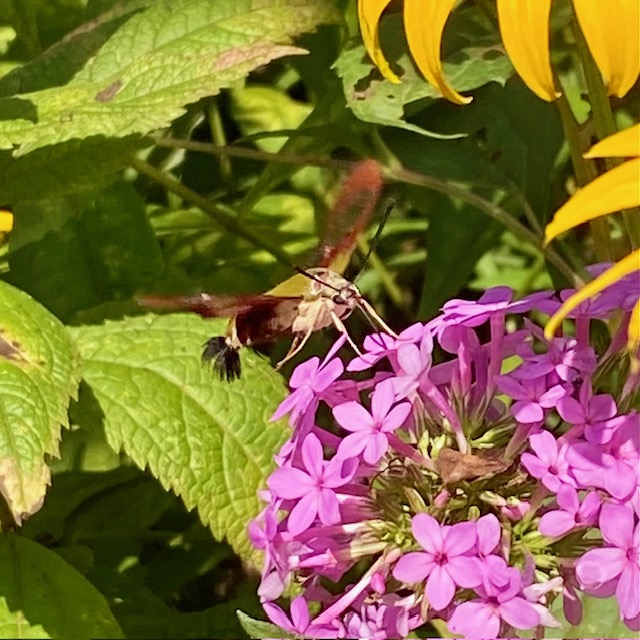
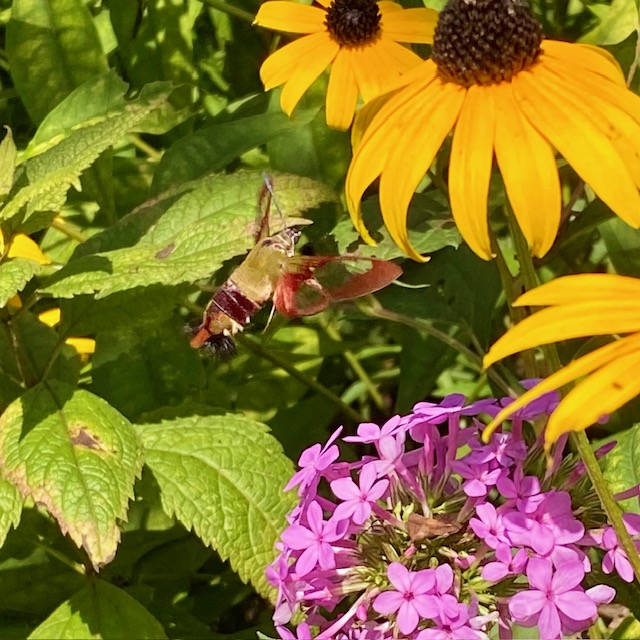
The clearwing hummingbird moth is one of my favorites in the Butterfly House. They truly look like small hummingbirds when they fly from flower to flower. You can see in the picture below that their wings are see-through. (Maybe hemaris thysbe was the inspo for Wonder Woman’s invisible plane? 😉 )
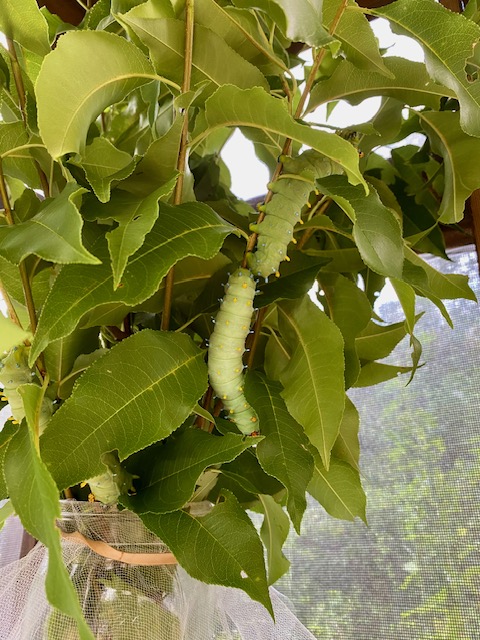
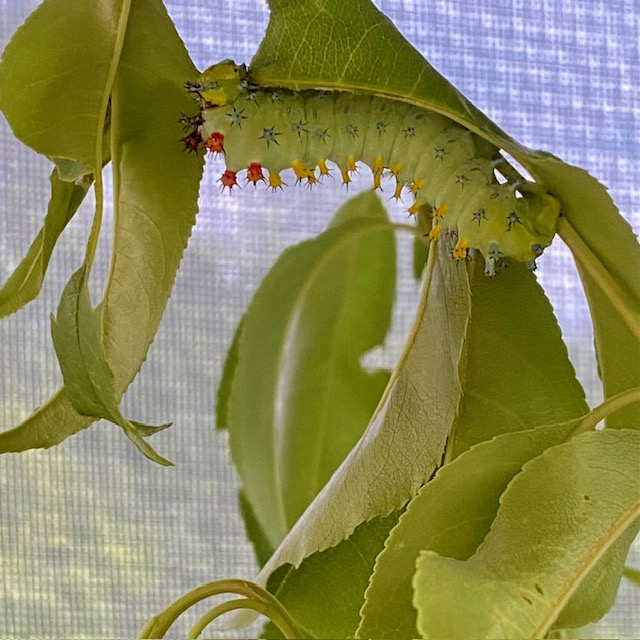
Cecropia moth caterpillarsCecropia caterpillar colors are very dramaticHummingbird Clearwing MothYou can see right through this one’s clear wing
Shoutout to some other amazing North and Central American Butterflies
I love Ladew Gardens Butterfly House because it allows Marylanders to see all the beautiful butterflies our state has. But I was lucky enough to see some exotic butterflies this season in their own native areas.
Costa Rican butterflies
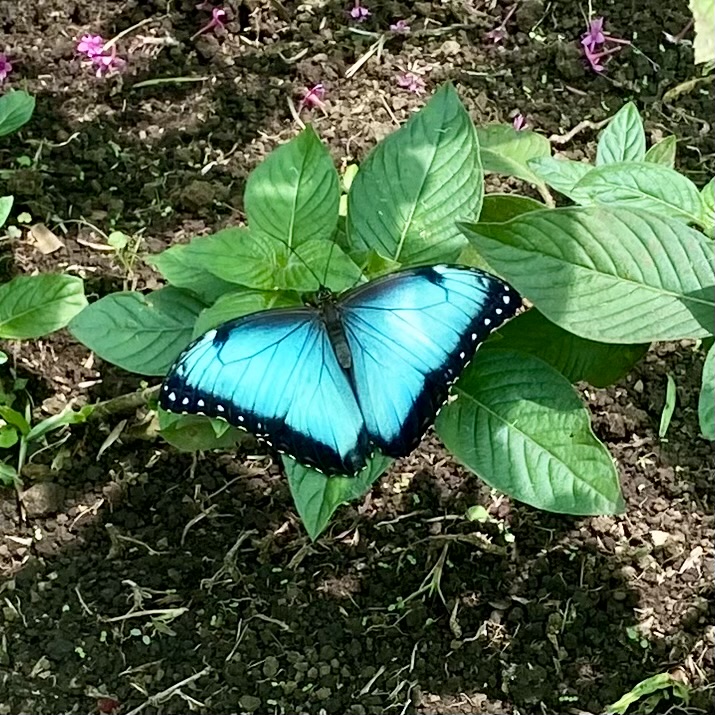
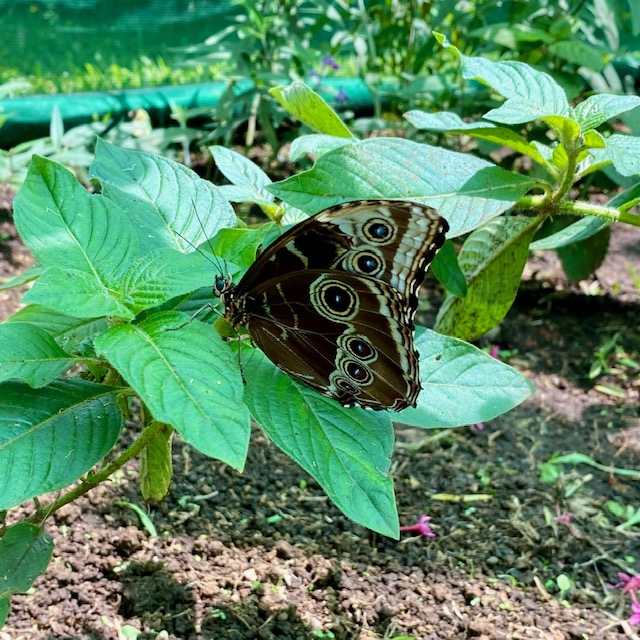
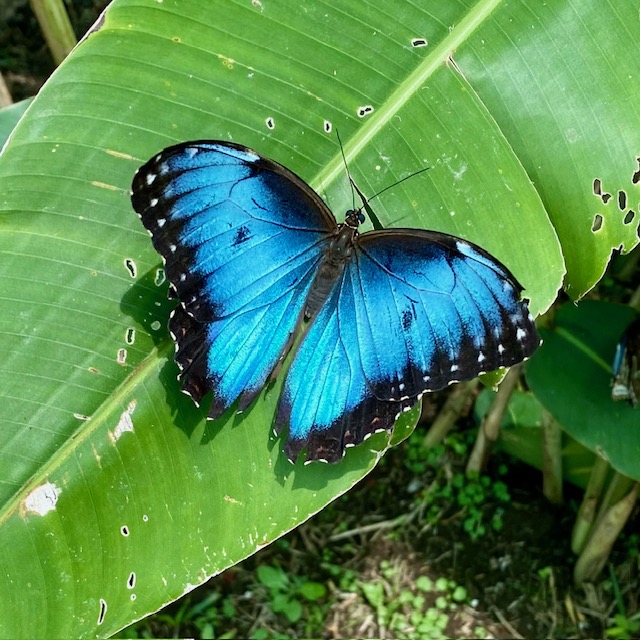
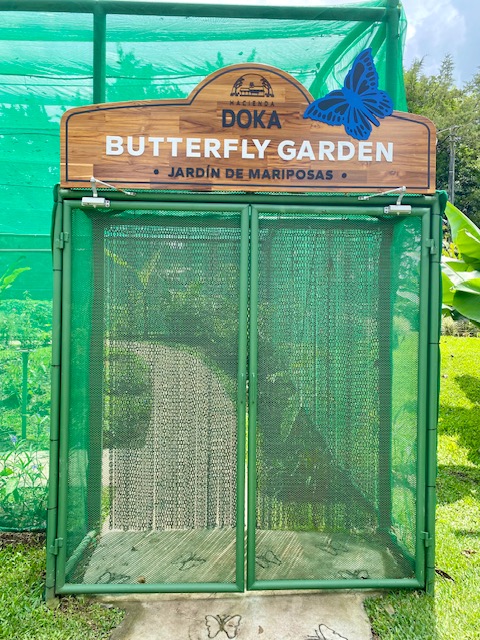
Blue morphos were everywhere! No need to go to a butterfly house to see them, but I was excited to check out the butterfly garden at Hacienda Doka and one in San Ramon. It was inspiring to see how Costa Ricans have embraced ecotourism and really want to rightfully show off all the natural wonder and beauty of their country.
Pura Vida is hard to translate but it’s a saying that seems to be equal parts carpe diem, joie de vivre, and stop and smell the flowers (or watch the butterflies). But it could also be used to express gentle acceptance of something that didn’t go as well as you wanted it to, gratitude, or simple acknowledgement.
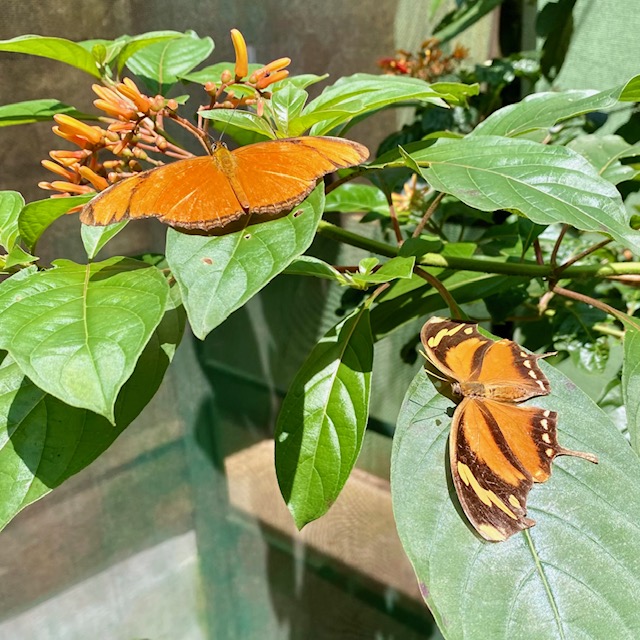
Blue MorphoBlue Morpho with wings upCosta Rica’s most recognizable butterflyJulia Heliconian and Tiger Leafwing
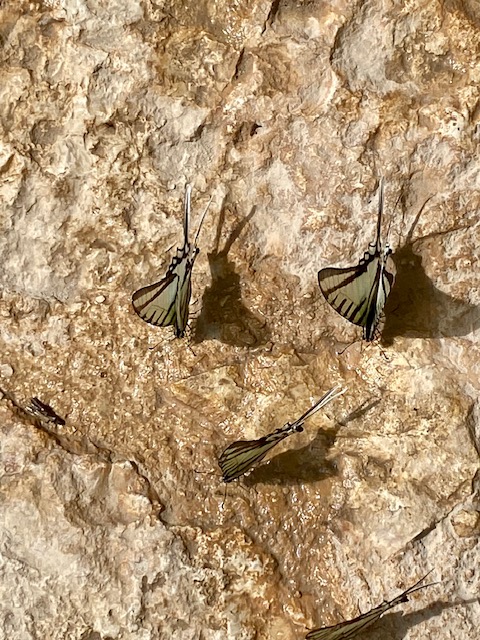
Mexican Kite Swallowtails
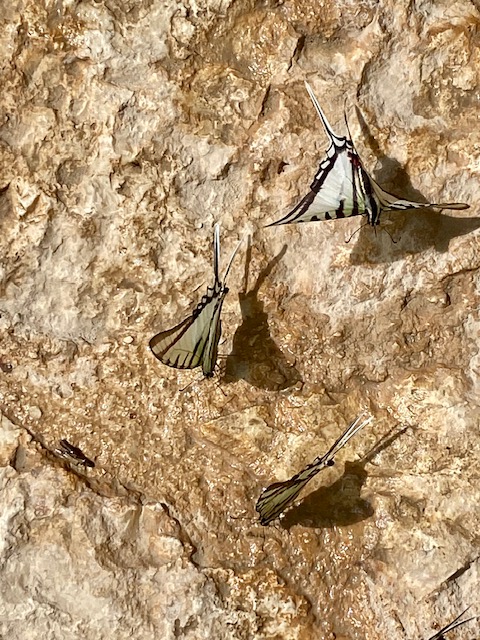
Saw these beauties at Cenote Zapote in the heart of the Yucatan. There were clouds of them “puddling” near the water. They have really long tails, a neat aqua color and kite shape, and are constantly fluttering. My encounter with them felt ethereal and was truly magical. I’m both awestruck and not surprised that these creatures have been on planet Earth for 100 million years!!
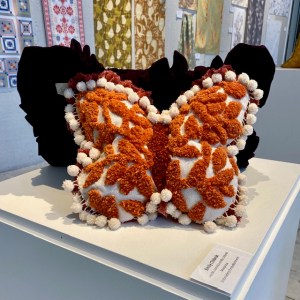
Fashion Institute of Technology Textile Design Student Emily Chibnik’s “Mariposa”
Last picture in this post, but my first butterfly sighting of this season. Was collecting Ellie from school last spring and we went to see the student exhibits at the Pomerantz Art and Design Center. This embroidered design was one of my favorites, showing that nature continues to inspire whimsical, delightful art.
That’s a wrap for my 2024 butterfly season ~ More lepidoptera next year!
If you’ve read this far, you deserve a high five and a discount on honey or a free t-shirt! Stop by our table this weekend and tell me your favorite butterfly or moth and I’ll give you a dollar off a jar of honey or a free Windtree Bee t-shirt (while supplies last — I only have a handful left). See you tomorrow at the market!


 Windtree Bee